
Deskripsi
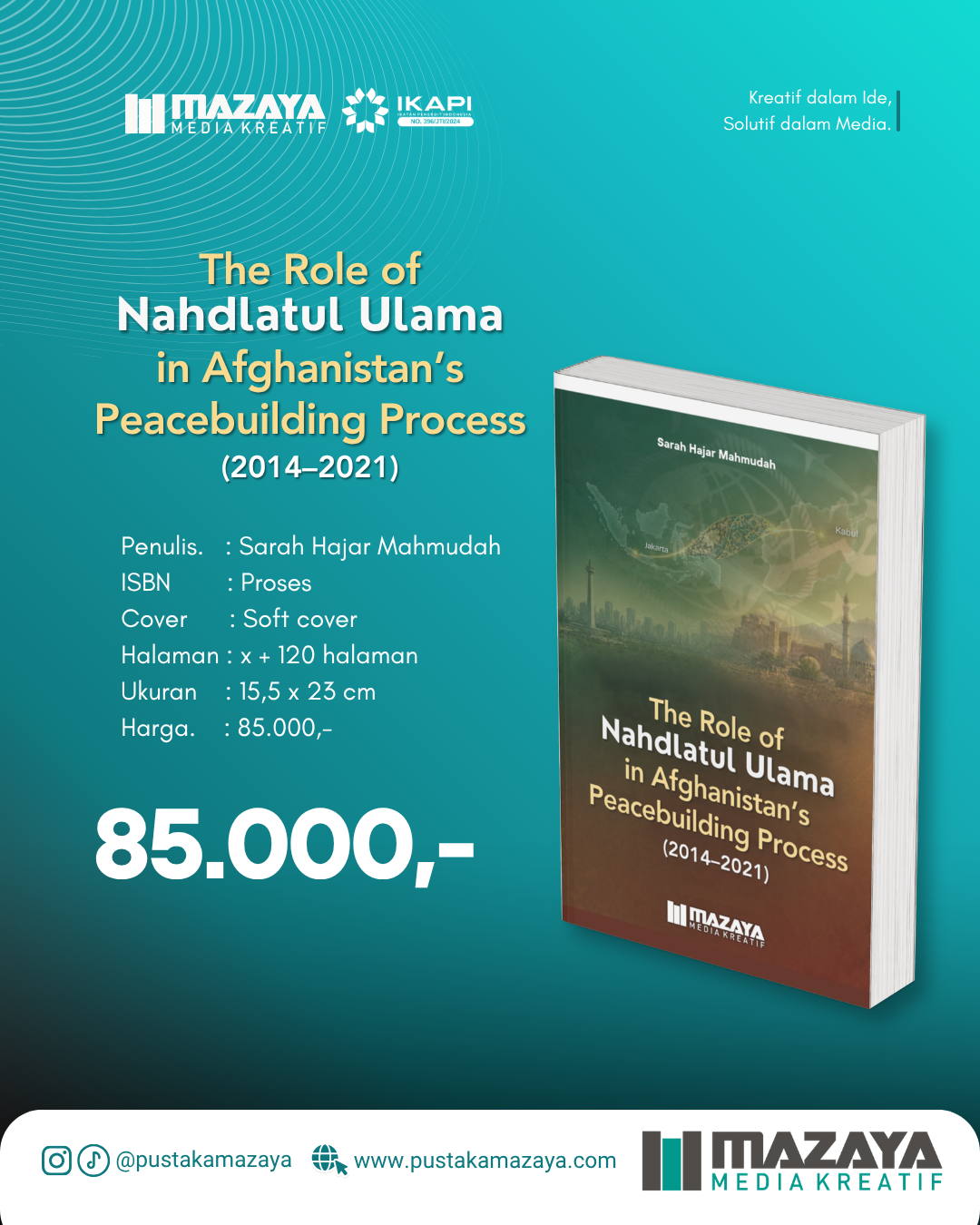
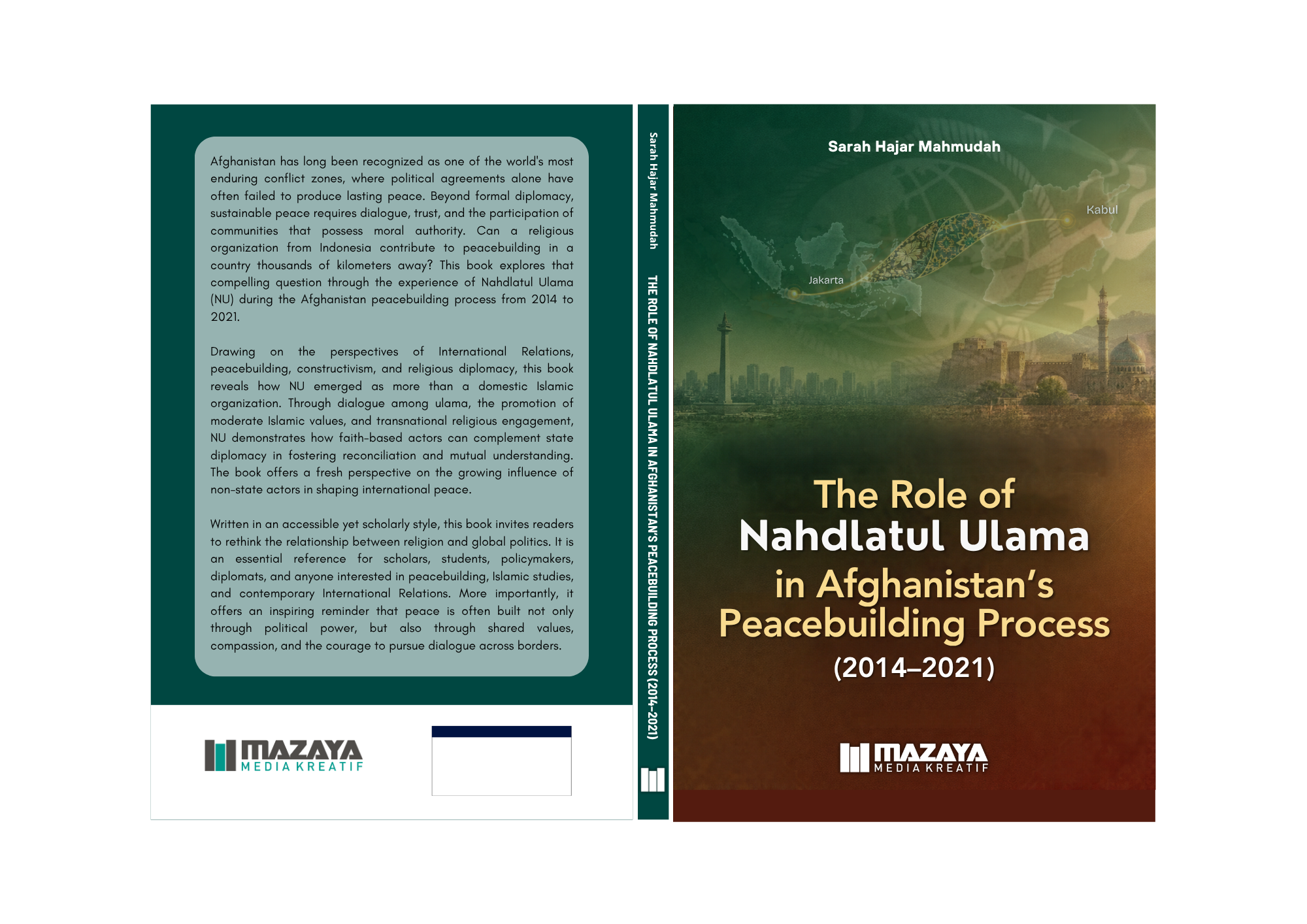
Afghanistan has long been recognized as one of the world’s most enduring conflict zones, where political agreements alone have often failed to produce lasting peace. Beyond formal diplomacy, sustainable peace requires dialogue, trust, and the participation of communities that possess moral authority. Can a religious organization from Indonesia contribute to peacebuilding in a country thousands of kilometers away? This book explores that compelling question through the experience of Nahdlatul Ulama (NU) during the Afghanistan peacebuilding process from 2014 to 2021.
Drawing on the perspectives of International Relations, peacebuilding, constructivism, and religious diplomacy, this book reveals how NU emerged as more than a domestic Islamic organization. Through dialogue among ulama, the promotion of moderate Islamic values, and transnational religious engagement, NU demonstrates how faith-based actors can complement state diplomacy in fostering reconciliation and mutual understanding. The book offers a fresh perspective on the growing influence of non-state actors in shaping international peace.
Written in an accessible yet scholarly style, this book invites readers to rethink the relationship between religion and global politics. It is an essential reference for scholars, students, policymakers, diplomats, and anyone interested in peacebuilding, Islamic studies, and contemporary International Relations. More importantly, it offers an inspiring reminder that peace is often built not only through political power, but also through shared values, compassion, and the courage to pursue dialogue across borders.


Ulasan
Belum ada ulasan.